

Why this one small step could save you from a lifetime of regret (and a whole lot of ramen)
This mistake catches more first-time buyers than almost any other.
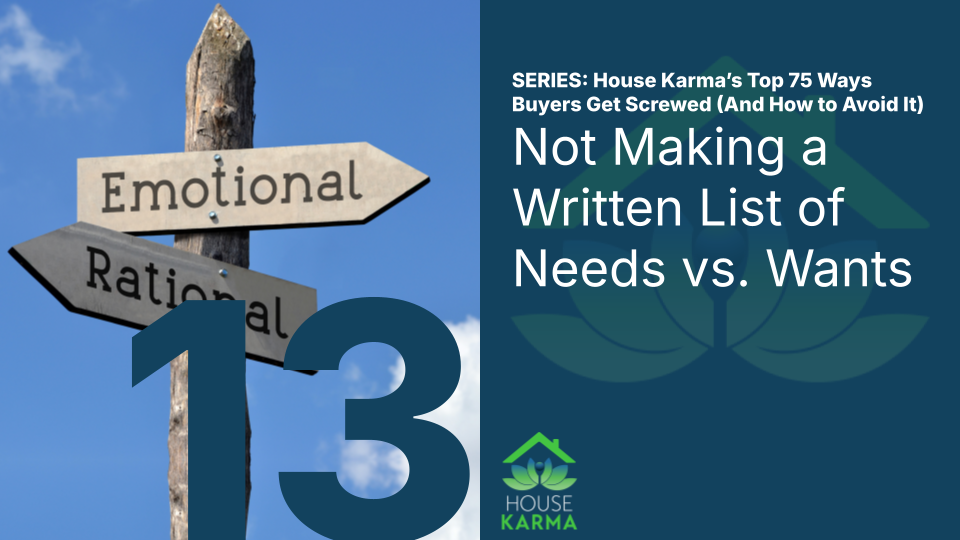
But even seasoned homeowners can fall for it — because homebuying is emotional, and emotions make us irrational.
We tend to buy what we want, not what we need.
We prioritize features that excite us in the moment instead of making choices based on lifestyle, long-term function, or financial stability.
It Starts with Good Intentions… Then Feelings Take Over
You walk into a house.
It smells like cookies. The kitchen sparkles. The floors shine.
You say something like, “Wow, I love this!” and boom — the agent takes note.
Smart agents are trained to read your emotional cues.
They listen closely, watch your body language, and figure out what’s triggering that excitement.
And then they use it to close the deal.
They’re not being manipulative — they’re doing what they were trained to do:
Sell you on what you’re already falling for.
But that’s when you stop looking at the whole picture and start buying a fantasy.
You ignore the commute.
You forget you needed a fourth bedroom.
You tell yourself the budget stretch is “worth it.”
And just like that, you’ve prioritized short-term emotions over long-term quality of life.
Logical vs. Emotional Decisions (And Why You Need a List)
Here’s what you need to understand:
- There’s no such thing as a perfect house
- Buying a home is a series of compromises
- A smart decision balances your needs, your budget, and your lifestyle
That’s why we strongly recommend making a written Needs vs. Wants list before you even start shopping.
Not just in your head — on actual paper.
Draw a line down the center. Label one side “Must-Have Needs” and the other “Nice-to-Have Wants.”
What Goes in the “Needs” Column
These are the things your life requires — not what your feelings desire:
- Number of bedrooms
- Number of bathrooms
- Garage or parking space
- One-story vs. two-story (if needed)
- Commute time (your time matters)
- Location, school district, neighborhood safety
- Lot size if you need space for pets, RVs, or future plans
Most of these cannot be changed, or are expensive and impractical to fix.
Floor plan, square footage, and location are fixed realities — don’t compromise on them.
What Goes in the “Wants” Column
These are the features that are great to have — but not worth sacrificing your needs or your budget over:
- Designer kitchens
- Fireplaces in the bedroom
- A bigger backyard
- Crown molding
- Smart home upgrades
- Fancy landscaping
- Paint colors or upgraded fixtures
And here’s the good news:
Most “wants” can be added later.
You can update a kitchen. You can remodel a bathroom.
You can always paint a room or upgrade floors when the budget allows.
But you can’t move the house to a better school district.
You can’t magically add another bedroom later without a major renovation.
And you sure can’t shrink your mortgage when you realize it’s too much.
Lifestyle and Budget: The Real Cost of Getting It Wrong
Your home is supposed to improve your quality of life — not diminish it.
Stretching your budget because you “fell in love” with something that isn’t essential leads to:
- Stress
- Lifestyle sacrifices
- Financial regret
- Resentment of your own decision
As we say at House Karma:
“You may love your home… but if you’re eating noodles by candlelight every night, it wasn’t worth it.”
Stick to your budget. Stick to your list.
Make your decision before the open house butterflies kick in.
Remember: It’s a Journey, Not a Destination
Your first home doesn’t need to have everything.
You’re not buying your forever home — you’re buying a solid starting point.
Get in. Build equity. Learn. Grow.
And in time, trade up — because you bought smart the first time.
How House Karma Helps You Stay on Track
We’ve seen how buyers get off course, and we’ve built tools to protect you:
- A printable Needs vs. Wants Worksheet
- A lifestyle-based budgeting planner
- Educational tips on remodeling later vs. overpaying now
- A Concierge Team (licensed pros) you can talk to — with no commissions at stake
You have access to everything you need to shop smart, protect your priorities, and avoid emotional traps.
Bottom Line
The more excited you are… the more you need that list.
Don’t rely on your memory. Don’t rely on your agent. And definitely don’t rely on your emotions.
Make your list. Stick to it. And protect your lifestyle, not just your loan.
This is how you buy your first home wisely — and set yourself up to buy your dream home later.
House Karma has your back the whole way.