

This is another topic that buyers don’t always think about — but it’s crucial for your health, safety, and your wallet!
Environmental hazards can show up in unexpected places, and some of them are expensive to fix — or even dangerous if ignored. Let’s walk through some examples:
What Should You Watch Out For?
- Radon — A naturally occurring radioactive gas that can seep into basements and cause serious health issues. It’s common in some parts of the country, rare in others — so check your area and get a radon test if it’s known to be an issue.
- Lead Paint — Homes built before 1978 often have lead-based paint, which can be a serious hazard — especially if you’re planning renovations or have young children.
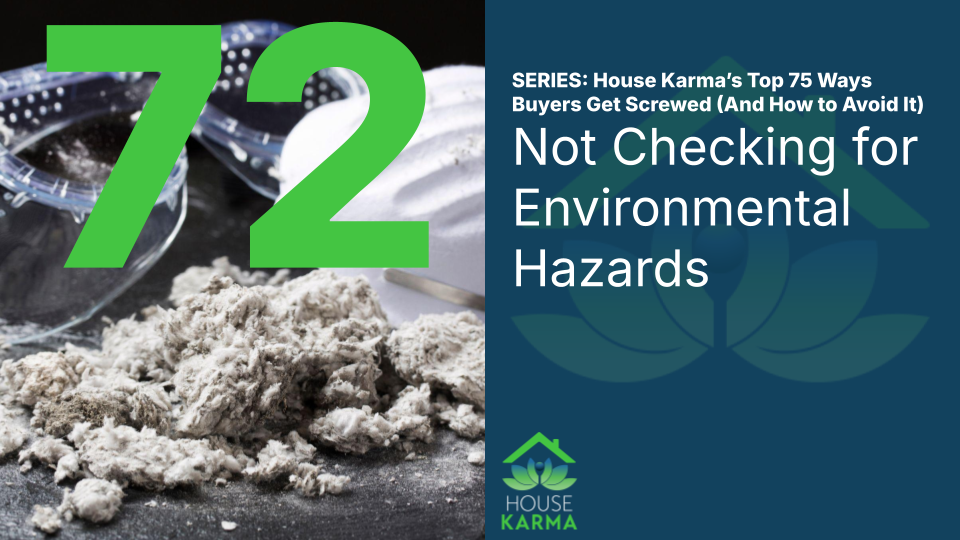
- Asbestos — Older homes might have asbestos in floor tiles, insulation, or pipe wrap. Disturbing it can release harmful fibers — so know what’s there and plan accordingly.
- Buried Oil Tanks — Some older homes had oil tanks buried underground that were never properly removed. These can leak and cause costly cleanup headaches.
- Filled-In Swimming Pools — Believe it or not, some properties have had swimming pools removed and simply filled in with dirt, which can lead to shifting ground or hidden hazards later.
- Historical Flood or Mold Issues — If the property has had past flooding, you could be dealing with hidden mold or water damage. Even if it’s been cleaned up, it’s still worth checking for mold or structural issues.
Why It Matters
Environmental hazards aren’t just “little extras” to check. They can:
- Be expensive to remediate — sometimes tens of thousands of dollars.
- Impact your health and the health of your family.
- Affect the property’s resale value later on.
What Should You Do?
- Know what’s common in your area — Look up environmental concerns in the county or city where you’re buying.
- Get inspections — If any of these items apply, make sure they’re part of your due diligence inspections.
- Put it in the contract — Ask your agent or broker to make sure you have time in your due diligence period to get the necessary environmental testing done.
- Talk to your inspector — They’ll know what environmental red flags are common in your area and can advise you on what to test for.
Strong Warnings & Final Advice
- Don’t assume it’s all fine just because the house looks great! Environmental hazards can hide behind pretty walls and fresh paint.
- Don’t let anyone — even a well-meaning agent — tell you it’s “not a big deal.” If it’s a concern in your area, it needs to be checked!
- Be proactive — Once you’re under contract, time is tight. Make sure you have everything lined up to do the inspections you need.