

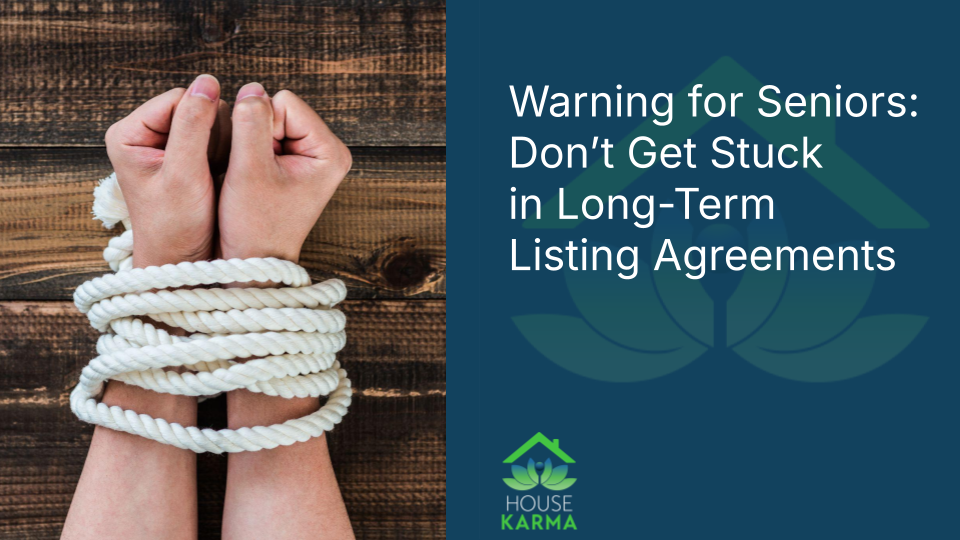
Seniors are being pressured every day into signing long-term real estate listing agreements—sometimes six months to a full year. On the surface, it may not seem like a big deal, but here’s the truth: these contracts can trap you in a relationship where the agent controls your home sale for far too long.
And once you’re locked in, it’s very difficult to get out.
Why This Is So Dangerous
- You lose control. If you need to move quickly for health or family reasons, you could feel forced to accept a lower offer just to get out of the situation.
- Most brokers won’t release you. Even if the agent isn’t doing their job, it’s common practice for brokers to refuse to cancel early—or to demand money if you want out.
- One year is a trap. If the agent underperforms, you’re stuck waiting until the contract expires—sometimes watching months of valuable time slip away.
The Safer Alternative
Protect yourself by keeping the agreement short and flexible.
- Aim for 60–90 days. This is enough time to market your home properly, but short enough to hold the agent accountable.
- Renew only if they perform. If your agent is working hard and doing a good job, you can always extend the agreement later. That’s how you stay in control.
- Know your rights. Canceling a listing contract is incredibly difficult in most states. That’s why it’s critical to set the right terms upfront.
- Ask the tough questions. Don’t sign anything without reading the cancellation policy, the “protection clause,” and the fine print.
Bottom Line
Your home is one of your biggest financial assets. A long-term contract shifts the power away from you and into the agent’s hands. Don’t let anyone pressure you into signing something that ties you down for a year.
Keep it short, stay in control, and protect your equity.

